
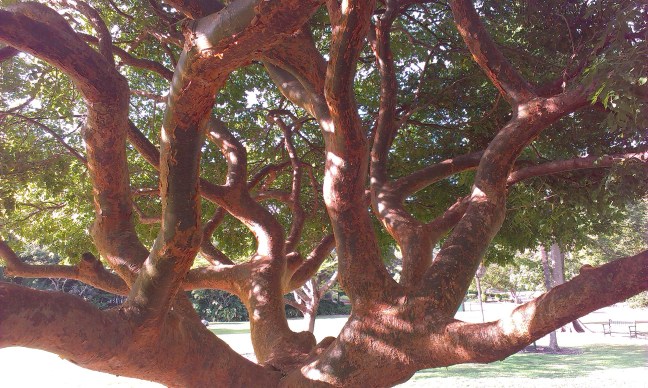
This article was published in Letters in the Gold Coast Bulletin 21/3/25. I wrote to the Editor in response to the article ‘Dangerous trees to be targeted in review’, GCB, 19/3/25 which reported on The Gold Coast City Council’s resolution to inspect and remove trees which may cause power outages in future high wind weather events. Many residents all over South East Queensland experienced blackouts as a result of Tropical Cyclone Alfred and the ensuing rain depression.
There is no question that trees do impact power lines in high intensity winds, but power poles and lines can and do topple over in open areas as well. Trees are not always to blame.
That’s why it is imperative that the Gold Coast City Council’s ‘dangerous’ tree audit (GC Bulletin, March 19) identifies and prunes or removes only those trees that clearly pose a risk. Also, a balanced approach that replaces lost trees with multiple suitable re-plantings nearby is needed.
Power poles and lines have one function, albeit an important one. Yet as a system tasked with delivery of power to homes and businesses, overhead lines are fragile and inefficient, and unsustainable over the long term. Poles and wires will eventually be replaced by more resilient technology.
Trees, on the other hand, have many functions — for example, shade, windbreak, dust filter, stormwater management, erosion control, air cooling, air cleaning, wildlife habitat and refuge. Trees are indeed amongst our most valuable assets for keeping our neighbourhoods and homes cool naturally. The multiple functions and contribution that their foliage, flowers, fragrance, and fruit make to community health and wellbeing cannot be substituted by anything else.
As our climate changes, trees and the many services they provide in the urban environment will be more important than ever, so it is critical to preserve existing trees wherever possible, and not be too heavy-handed with the axe.
 subtropicalcities.com
One thought on “Climate resilience, power lines and trees”