
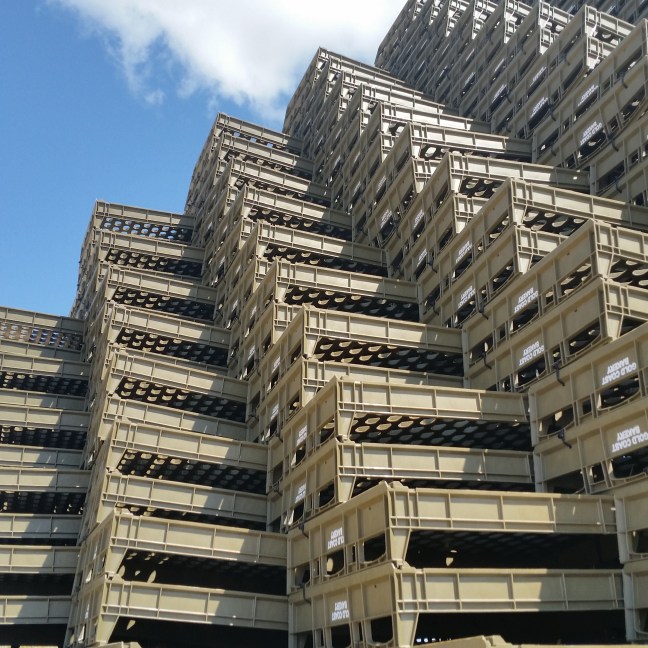
On eve of the ShapingSEQ 2023 Update, this article reprises a presentation I made 17 years ago, after the launch of the historic 2005 SEQ Regional Plan that envisioned a well-designed subtropical region, and following the first Subtropical Cities Conference in Brisbane in 2006.
The 2006 presentation proposed two scenarios to describe what SEQ would be like in 2050 depending on whether or not we took climate-based landscape and lifestyle as our cue in the policy environment, hot and paved, or transformed and green.
Back then, I really thought that we would see progress by now toward Scenario 2 which is inclusive, connected and based on a clean energy economy, even as the population grows and becomes older.
Sadly, Scenario 1 is becoming more and more inevitable.
It’s time to break the paralysing impasse in our response to climate change to prevent the worst case becoming reality.
Excerpt from a 2006 post-conference presentation:
“At the Subtropical Cities 2006 Conference, we invited futurist Dr Sohail Inayatullah to speculate on what SEQ would be like in 2050. The futures he described went something like this —
In 2050 SEQ will be:
- Still livable, or
- Hot and paved – and its people wired and miserable, or
- Or transformed and inclusive – from sprawling metropolis to clean, green, compact and walkable city — and its people thriving and connected.
We must ask the question, ‘What is our preferred future?’ Taking these descriptions as our starting point, we propose two scenarios to focus our minds on what our community be like in 20, 30, 40 years’ time.
Future Scenario 1
By 2050,
- Despite region-wide and city-wide visioning and regional planning in the early decades, haphazard patterns of development resulted and population growth, resource use and land development pressures stressed both ecological integrity and social fabric.
- The supremacy of the private motor vehicle significantly shaped the urban form of South East Queensland during its most intensive period of population growth.
- Congestion worsened as the city allowed private ownership of autonomous vehicles. The opportunity to reform spatial demand for car parking and roads was lost.
- Governments of all levels took the path of least resistance and consumed historic parks to retrofit transport corridors in attempts to reduce traffic chaos.
- Urbanisation was expansive rather than compact – both high density and sprawl.
- Growth was fastest at the cities’ margins, where the exurbs lured residents with larger and larger houses, and big-box shopping.
- Development resisted containment by the urban footprint. But far-flung suburbs and over-scaled houses were later abandoned as energy and transport costs soared.
- Parks, public buildings, and playgrounds necessary for a highly developed social life in suburban community, were seen as expensive and inequitable when rapid expansion and speculation drove high land prices.
- Open space failed to meet the increasing population’s outdoor recreational demands.
- In the affluent first decades of the millennium, residents’ expectations of thermal comfort were influenced more and more by artificial environments and people sought to block out the vagaries of climate through technological means powered by fossil fuels.
- Air-conditioning eventually became so pervasive that it was actually written into building codes as a requirement.
- As a result, developers could utilise standardised designs that no longer needed to respond to the subtropical climate – year round monotony became the fate of residents.
- Ambient outdoor temperatures in the city increased even more than in the surrounding rural areas as more and more unshaded hard surfaces absorbed and re-radiated heat, and more and more heat-producing motors to run the fans to cool the refrigeration plant and computers produced more heat and more noise. We defaulted to the air-conditioner to at least make indoor spaces seem bearable all the more.
- Community health has deteriorated as urban form became more and more alienating, and less and less walkable.
- The gap between rich and poor is extreme – the city’s wealthiest citizens no longer inhabit the ground plane.
- The noise of private air craft dominates life around the clock – not much birdsong is ever heard.
- Some parts of the city are plagued by lack of sanitation infrastructure and an inability to meet demand for potable water.
In this scenario, the future city bears little connection to the once-benign climate and natural environment.
This scenario seems extreme, but already exists in other cities across the world, and SEQ is not immune to these outcomes.
When the IPCC’s predictions for global warming play out in the coming decades, and SEQ’s current macro-climatic characteristics, which are generally pleasant, give or take the odd heat-wave, are heavily aggravated by significant increases in average temperatures, and rain that either does not fall at all, or when it does, it’s no summer shower but a destructive deluge amplified by proliferation of hard surfaces…will we emerge from the cocoons of our air-conditioned bedrooms as Summer peters out to something more bearable, in a grotesque reversal of the experience in northern hemisphere countries where the populace stays indoors during the harsh winters?
So much for the lifestyle we currently enjoy – where the line between indoors and outdoors often blurs – encounters of all kinds, business and pleasure, take place al fresco; walking cycling, relaxing, entertaining, indulging our penchant for spectating and playing sport, festivals, concerts under the stars – do these move indoors to artificial environments?
If the current rates of non-renewable energy use in building operations and transport across far-flung suburbs are allowed to continue, the quality of life in our communities, and the environment generally, will be severely compromised in the future.
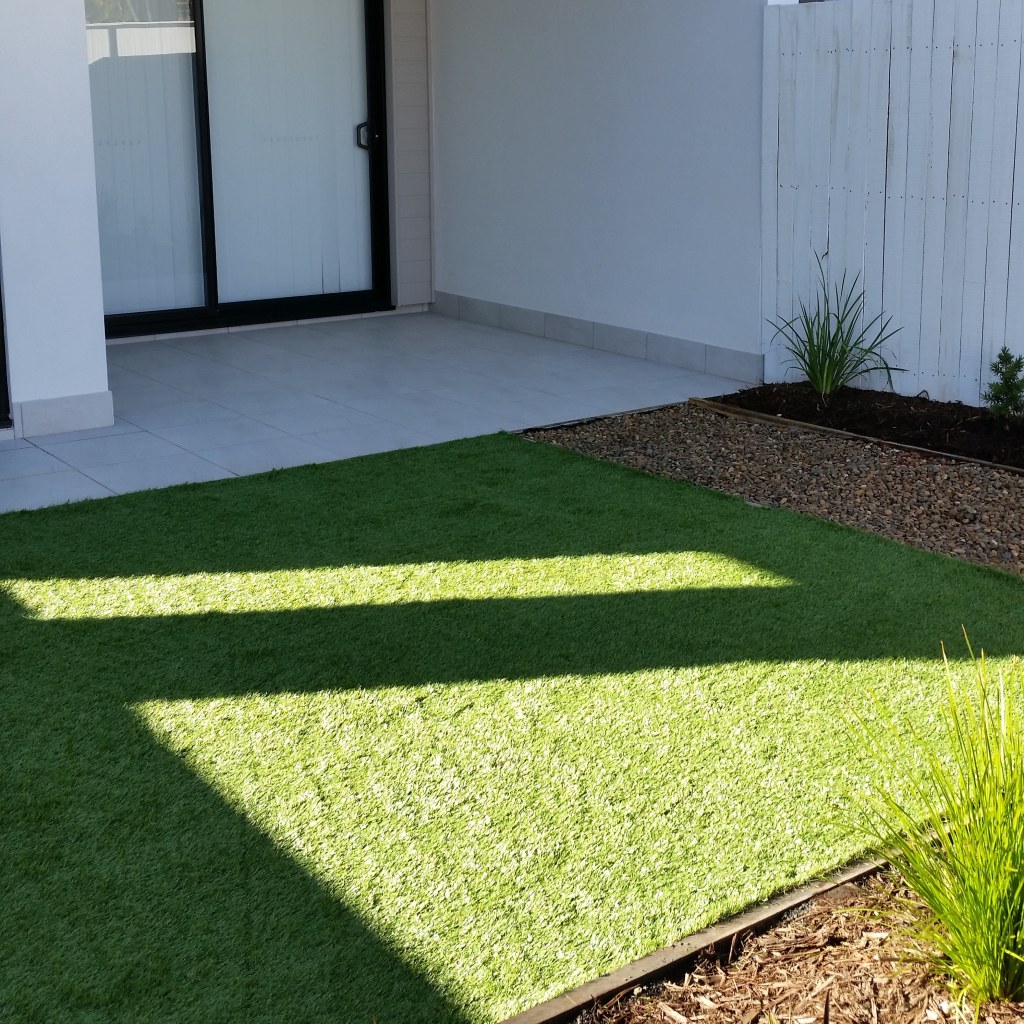
Future Scenario 2
What about imagining another future?
By 2050,
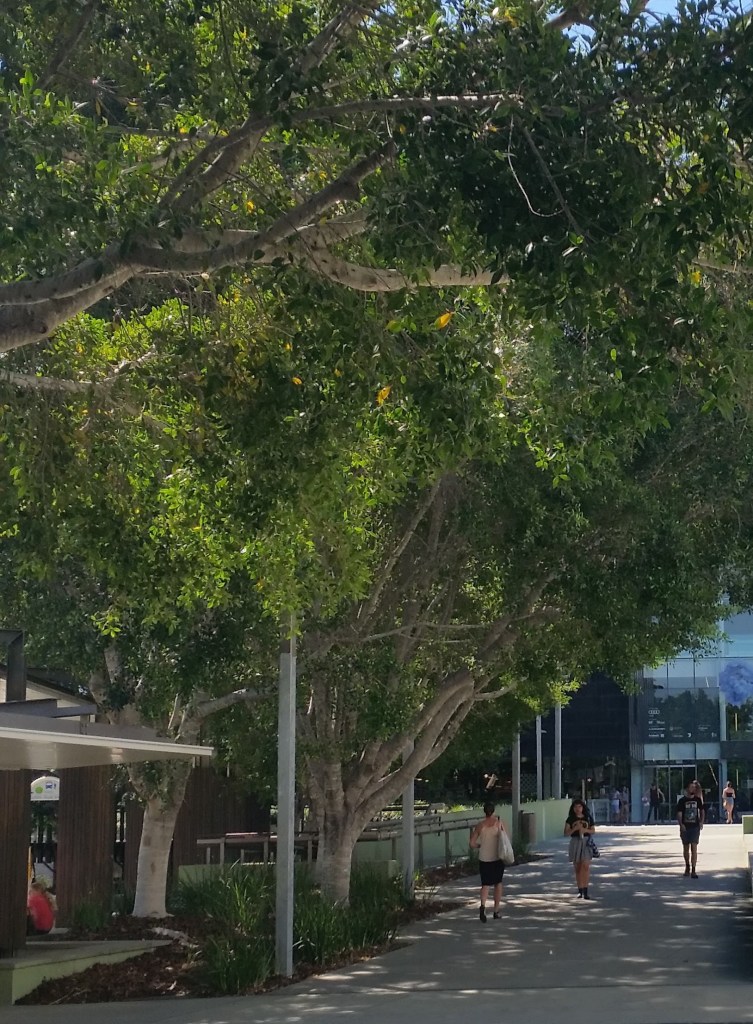
- An abundance of vegetation throughout urban areas of the region is the distinctive mark of this mature, socially equitable, economically vibrant, ecologically healthy place.
- The contribution that open space makes to the inhabitants’ quality of life, and the educational role of open space in providing models for responsible environmental behaviour was recognised through informed and visionary planning.
- Open space provisions including urban shadeways and networks of green set the benchmark for international cities, with linked-up open space on a continuum from the regional through to the neighbourhood, street and private scales.
- Shade-ways are multi-directional and provide the natural pathways for people’s daily movement patterns to and from workplaces on foot or via a transport network.
- Vegetation has long been considered essential to clean healthy urban environments – not something devalued, discarded in value management exercises but integrated, considered first in decisions about what, where, why and how to build.
- Riparian corridors and drainage corridors are rejuvenated.
- Impervious surfaces are minimised and instead of warm, contaminated water pouring into our waterways during storms, water is collected by buildings and streets, directed to shade-ways of urban gardens, roof gardens, living walls, and avenues of street trees and allowed to percolate slowly into the aquifer, replenishing waterways naturally.
- Energy and water resources are enough – water and energy security are assured..
- Demand for water is related to necessity, and potable supplies meet demand with ease.
- The region’s reputation for design of highest quality high-medium density inter-generational communities is world-renowned.
- Widespread spatial demand for private and public parking space has reduced dramatically because individual ownership of driverless cars was disallowed in a preemptive decision.
- Large car parks, above, below or at surface level are long obsolete. They have been transformed effortlessly into other uses because of foresight in the early decades which saw reduced need for parking large private vehicles, and made sure that head heights and natural light and ventilation provisions made adaptation feasible.
- Policies in the early decades which promoted compactness and densification, tailored for the subtropical condition, led to a profusion and confirmation of the very qualities, particularly in the public realm, the SEQ Regional Plan sought to confirm and create.
South East Queensland’s stunning transformation from a sprawling 250km metropolis to a series of clean, green, compact and walkable cities took a few decades but we made it.”
– End of excerpt.
All photography is by Rosemary Kennedy. The featured image is of Bread Project installation by Clayton Thompson, at Swell Sculpture Festival 2016.
If you are interested in designing your future and how to create a liveable and friendly city for future generations, we offer design review, advice and master-classes to clients in business, industry and government.
 subtropicalcities.com